
• Home
  • Auto
  • Business
  • Education
  • Food
  • Health
  • Home Improvement
  • Shopping
  • Travel
  • Technology
  • Contact US
Time Business News
keep your memories alive
Health

Is a Refillable Natural Deodorant Worth Switching To?

by Streamline October 16, 2026
written by Streamline

Most of us bin a deodorant container every month or two without a second thought. Refillable deodorants offer a different deal: you keep the case and only buy what goes inside. It sounds sensible, but does it really save money, cut waste and work as well as the stick you’re used to?

If you’re weighing up a natural refillable deodorant, the answer comes down to three things: the real cost over time, how the formula performs on your skin and whether you’ll stay with one brand long enough to benefit.

Quick answer: A refillable natural deodorant is usually worth it if you find a formula you like and keep using it. You pay more upfront for the reusable case, then less for each refill, and you throw away fewer complete containers. It won’t stop you sweating, and refills generally only fit the same brand’s applicator.

How Does a Refillable Deodorant Work?

You buy a starter pack once, which gives you a reusable applicator and a first refill. When the deodorant runs out, you take out the empty insert, fit a new one and carry on with the same case. Mechanisms differ between brands, but the idea is the same: the part you’d normally throw away stays in your bathroom.

“Natural” describes the formula, not the packaging, and it has no legal definition for UK cosmetics. So judge the case and the ingredients separately.

Does Refillable Deodorant Save You Money?

Usually, but only after the first purchase. Here’s how it works out using Oltra Guard’s listed prices at the time of writing (October 2026):

Option

Cost

Starter Pack (applicator + 40g refill)

£12.95

Replacement 40g refill

£5.95

Starter Pack plus five refills

£42.70

Six separate Starter Packs

£77.70

That’s a £35 difference over six 40g units, before delivery. Oltra says each refill lasts about six to eight weeks, which works out at roughly £3.20 to £4.30 a month. When comparing brands, look at the cost per gram or per month rather than the sticker price, because refill sizes vary widely.

Is Refillable Deodorant Better for the Environment?

It can be, with caveats. Keeping one applicator for a year means fewer complete cases in the bin. But the overall impact also depends on what the applicator and refills are made from, how refills are packaged and shipped, and whether you can recycle them locally. The longer you keep using the case, the bigger the benefit. Look past vague green claims for specific details on materials and disposal.

Does a Natural Aluminium-Free Formula Actually Work?

The case is the eco part; the formula decides whether you stay fresh. A natural aluminum free deodorant controls odour rather than sweat, so you’ll still feel some moisture, particularly when exercising. In place of aluminium salts, these formulas use ingredients such as magnesium hydroxide to neutralise odour, zinc ricinoleate to trap it and tapioca starch to absorb a little surface moisture.

For many people, one morning application covers an ordinary day, with a top-up after the gym. If staying dry matters more to you than smell, an antiperspirant is still the better tool. And if you have sensitive skin, check the label for fragrance and sodium bicarbonate, and choose a version without them if either has bothered you before.

The Drawbacks Worth Knowing

  • Higher upfront cost: the starter pack costs more than a single refill.

  • Brand lock-in: refills usually only fit the same brand’s applicator.

  • Reordering: if refills are sold online only, you’ll need to order before you run out.

  • Durability: the savings depend on the applicator lasting.

None of these is a deal-breaker, but they matter if you like trying a new brand every few months.

How Oltra Guard’s Refill System Works
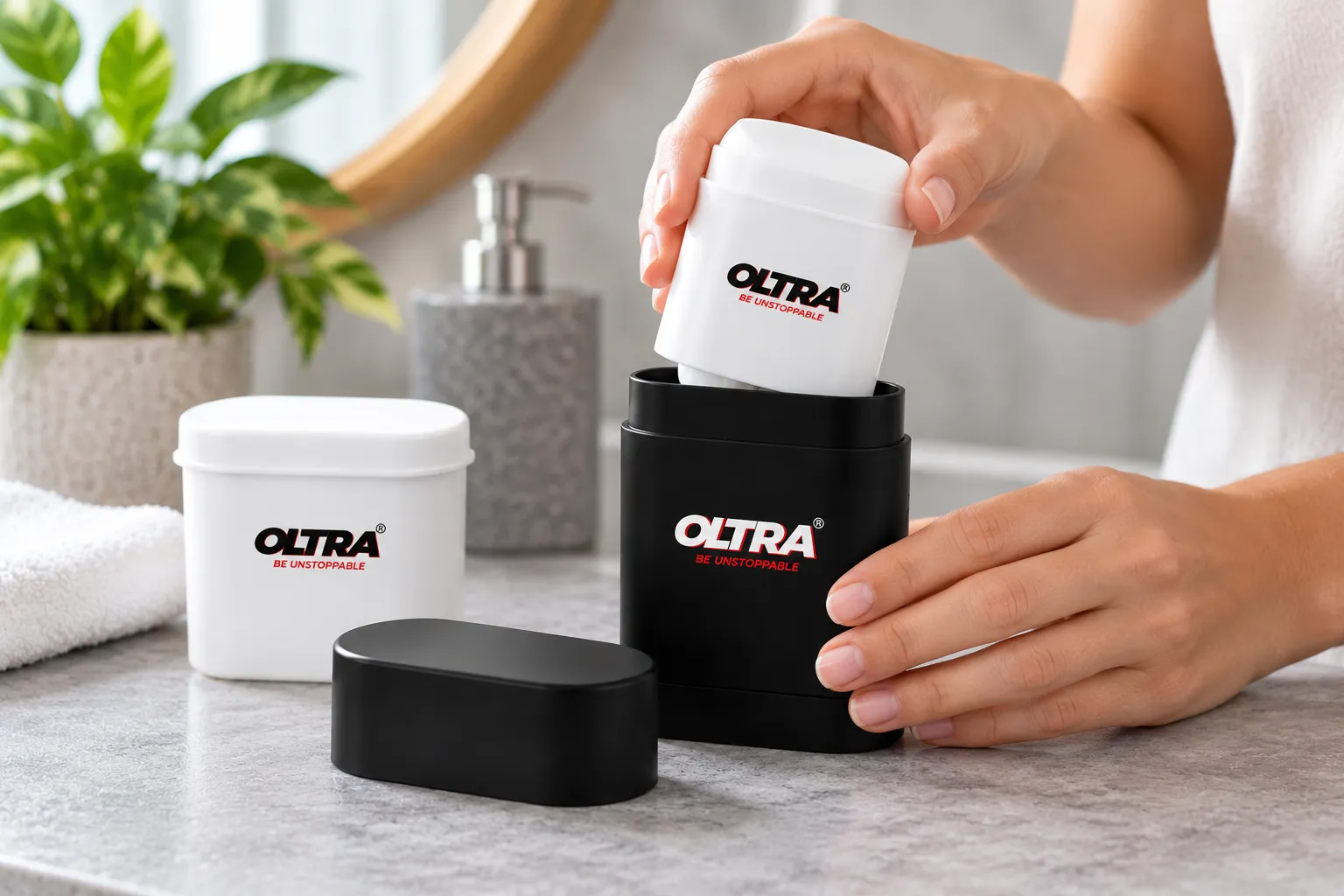
Oltra Guard is one example of a refillable natural deodorant built around a reusable applicator. The Starter Pack includes the applicator and one 40g refill, and replacement refills fit the same case. The aluminium-free formula comes in Standard and Bi-Carb-Free versions, with Core as the fragrance-free scent, and a 30-day money-back guarantee takes some of the risk out of trying it. As with any deodorant, how well it suits you depends on your skin and routine.

Frequently Asked Questions

Is refillable deodorant cheaper than regular deodorant?

Over time it can be, because a refill costs less than a full product with a new case. The saving depends on the refill price, its size and how quickly you use it. Compare cost per month, as some budget supermarket deodorants may still work out cheaper.

Can you put any refill in a refillable deodorant case?

Usually not. Most refillable deodorants use their own design, so one brand’s refills won’t fit another brand’s applicator. Check compatibility before you buy, especially if you think you might switch brands later.

How long does a 40g deodorant refill last?

Typically around six to eight weeks with daily use, though it depends on how much you apply and how often you reapply. A thin layer once a day lasts much longer than several top-ups after workouts.

How do you clean a refillable deodorant applicator?

Between refills, wipe the inside and outside of the case with a damp cloth to remove any residue, then let it dry completely before fitting the new refill. Avoid soaking it or using harsh cleaners unless the brand’s instructions say it’s safe.

What is the difference between natural and regular deodorant?

Natural deodorants generally avoid aluminium and use mineral or plant-derived ingredients to control odour, while many regular products are antiperspirants that also reduce sweat. Because “natural” isn’t legally defined for UK cosmetics, the ingredient list tells you more than the label.

Do refillable deodorants work as well as normal ones?

The packaging doesn’t change performance; the formula does. A refillable deodorant with an effective odour-control formula can work just as well as a disposable one. What it won’t do, if it’s aluminium-free, is reduce sweating like an antiperspirant.

Final Thoughts

A refillable natural deodorant makes the most sense when you find a formula you like and stick with it. Check the real cost per month, read the ingredients and make sure refills are easy to get. Do that, and you’ll cut down on packaging without giving up on feeling fresh.


October 16, 2026 0 comment
0 FacebookTwitterPinterestEmail
Health

Aluminium Free Deodorant: Can It Really Control Underarm Odour?

by Streamline October 16, 2026
written by Streamline

Plenty of people would rather skip antiperspirant. Some want their body to sweat the way it’s designed to. Others are tired of white marks on dark tops and yellow rings on white shirts. Either way, the worry is the same: will I smell by mid-afternoon?

For most people, no. Sweat and odour are two separate things, and a well-made aluminum free deodorant is designed to handle the second one. Know what it can and can’t do, and staying fresh without aluminium is very realistic.

Quick answer: Yes. An aluminium-free deodorant won’t stop you sweating, but it can control body odour by neutralising or trapping the compounds that cause it. Results depend on the formula, your body chemistry and your routine. If heavy sweating is the real problem, you may need an antiperspirant or advice from your GP.

Where Does Underarm Odour Actually Come From?

Here’s what surprises most people: sweat is close to odourless when it first leaves your skin. Your armpits have apocrine glands that release an oilier, protein-rich type of sweat, and the bacteria that naturally live there break it down. Those by-products are what you, and the person next to you on the train, can smell.

That’s why two people can sweat the same amount and smell completely different. Hormones, stress, diet and fabric all play a part. The practical takeaway: to stop the smell, you don’t have to stop the sweat.

Deodorant vs Antiperspirant: What’s the Difference?

They share a shelf, but they do different jobs. Antiperspirants use aluminium salts, such as aluminium chlorohydrate, to temporarily plug the sweat ducts so less moisture reaches the skin. Deodorants leave sweating alone and go after odour instead.

Antiperspirant

Aluminium-free deodorant

Main job

Reduces sweat

Controls odour

Active ingredients

Aluminium salts

Odour neutralisers and absorbers

Will you still sweat?

Less

Yes, as normal

Best suited to

Heavy sweating

Odour control with natural sweating

Neither is automatically better. It comes down to whether sweat or smell bothers you more.

Is There Such a Thing as an Aluminium Free Antiperspirant?

The short answer is: not really. People search for an aluminium free antiperspirant because they want dry underarms without aluminium salts. But aluminium is the ingredient doing the sweat-blocking, so a product without it is, by definition, a deodorant.

Some aluminium-free formulas add starches or clays that absorb a little surface moisture, so they feel drier for a while. That’s absorption, not sweat reduction, so check exactly what each product claims. Odour control and reduced sweating aren’t the same promise.

Which Ingredients Control Odour Without Aluminium?

The full formula matters most, but these ingredients come up again and again:

  • Magnesium hydroxide: a mineral that helps neutralise odour, often used instead of bicarbonate of soda.

  • Zinc ricinoleate: traps odour molecules rather than covering them with perfume.

  • Tapioca starch: soaks up some surface moisture for a less damp feel.

  • Sodium bicarbonate: a strong odour neutraliser, though its alkalinity leaves some people itchy.

How to Choose a Deodorant for Sensitive Skin

Underarm skin is warm, often damp, rubbed by clothing and regularly shaved, so it reacts more easily than skin elsewhere. If you’re looking for a deodorant for sensitive skin, ignore the front of the pack and turn it over.

Fragrance is the usual first suspect, so a product with no parfum is a sensible place to start. If bicarbonate of soda has irritated you before, choose a formula without it. And remember that “natural” isn’t the same as gentle: essential oils can trigger reactions too.

Oltra Guard is one UK option built around these choices. It’s aluminium-free, comes in Standard and Bi-Carb-Free formulas, and its Core option is fragrance-free. The Starter Pack gives you a reusable applicator and one refill, so you can pick the formula and scent that suit your skin. As with any deodorant, results vary.

Simple Habits That Keep Odour Away for Longer

  • Apply to clean, completely dry skin, never over old product or fresh sweat.

  • Stick to a thin layer. Extra product adds residue, not protection.

  • Wash gym kit promptly, because synthetic fabrics hold on to odour.

  • After exercise, freshen up and reapply instead of piling more on.

When Is Deodorant Not Enough?

If sweat regularly soaks through your clothes or knocks your confidence, it could be hyperhidrosis, and an everyday deodorant won’t fix it. The same goes for a sudden change in body odour or irritation that won’t settle. A GP or dermatologist can look into the cause.

Frequently Asked Questions

Do aluminium-free deodorants stop you sweating?

No. Without aluminium salts, a deodorant can’t block your sweat ducts, so you’ll sweat normally. It controls the odour that forms when skin bacteria break sweat down instead. Added starches absorb a little moisture, but that isn’t sweat reduction.

Is aluminium in antiperspirant bad for you?

Cancer Research UK says there’s no good evidence that antiperspirants or deodorants cause breast cancer, and aluminium salts are permitted in UK cosmetics. Going aluminium-free is a preference, not a health necessity.

What stops body odour if a deodorant has no aluminium?

Aluminium-free deodorants tackle the smell itself. Zinc ricinoleate traps odour molecules, magnesium hydroxide and sodium bicarbonate help neutralise them, and starches absorb some surface moisture. The better formulas don’t rely on fragrance alone.

Is aluminium-free deodorant better for sensitive skin?

Not automatically. Removing aluminium changes how a product works, not how gentle the rest of the formula is. Fragrance, bicarbonate of soda and essential oils are more common irritants. If your skin reacts easily, choose a fragrance-free, bicarb-free formula and patch test it first.

Does aluminium-free deodorant prevent yellow sweat stains?

Often, yes. Yellow underarm marks on white clothing are largely linked to aluminium compounds mixing with sweat, so many people notice fewer stains after switching. You’ll still see damp patches, though, because you’re still sweating.

Can aluminium-free deodorant keep you fresh during exercise?

It can control odour while you work out, but it won’t keep you dry. Apply it to clean skin beforehand, wear moisture-wicking kit and change out of damp clothes soon after. For long sessions, wash and reapply rather than layering on more.

Final Thoughts

You don’t need aluminium to control underarm odour, as long as you’re clear that deodorant manages smell, not sweat. Choose a formula your skin is happy with and give it a fair trial. If sweating itself is the issue, speak to a professional.

October 16, 2026 0 comment
0 FacebookTwitterPinterestEmail
Business

Custom Engraved Awards: How to Choose the Right Engraving Style

by Streamline October 16, 2026
written by Streamline

Quick answer: The right style for custom engraved awards depends on the material, the space and the occasion. Laser engraving suits glass, acrylic and detailed logos, diamond drag gives fine lines on metal plates, and hand engraving suits silverware. Then choose a plain font and make the recipient’s name the most prominent line.

Two awards can cost the same and look worlds apart once they’re engraved. One has a crisp, well-spaced inscription you can read from across the room. The other has six lines squeezed onto a small plate in a font nobody can make out.

The difference is rarely the award itself. It’s the decisions made before production: the method, the font and the layout. Here’s how to get each one right when you order custom engraved awards.

1. Know the Three Main Engraving Methods

Method

How it works

Best for

Laser

A focused beam marks or removes the surface

Glass, acrylic, coated metals, timber and detailed logos

Diamond drag

A diamond-tipped stylus scratches a fine line

Brass and metal plates, classic lettering

Hand

An engraver cuts each letter by hand

Silverware, cups and one-off pieces

Laser is the most versatile method and handles logos best. Diamond drag gives the traditional finish that suits trophy and plaque plates. Hand engraving takes the longest, so allow extra time if you want it.

2. Match the Engraving to the Material

  • Glass and crystal: laser engraving leaves a frosted mark that shows up best against a dark background. It’s permanent, so a wrong letter means a new award.

  • Acrylic: engraves crisply and suits bold, modern layouts.

  • Metal plates: usually small, so keep to short lines with strong contrast, such as black lettering on a gold or silver plate.

  • Timber: a laser leaves a darker, burnt mark, which stands out most on lighter woods.

For corporate presentations, engraved awards in crystal or glass look polished, but have a second person check every word before you approve them.

3. Choose a Font That Still Reads When It’s Small

Serif fonts, with small finishing strokes on each letter, suit formal engraved awards such as long service, academic honours and commemorative plaques. Sans-serif fonts look clean and modern on corporate and acrylic awards. Keep script fonts to a single line, such as the recipient’s name, on a larger award; on a small plate they blur together.

A quick test: print your wording at its actual size. If you have to squint, it won’t read once it’s engraved.

4. Make the Recipient’s Name the Most Prominent Line

When every line is the same size, nothing stands out. Decide what matters most and let it lead. On a workplace award, that’s usually the person:

Priya Shah
Employee of the Year
Coastal Freight Group
2026

On a team trophy, the result might lead instead, such as “2026 Premiers”, followed by the division and club. Whichever you choose, use the same order across every award in the set.

5. Leave Room Around the Words

A small plate comfortably holds three or four short lines. If you need a longer citation, choose a larger award rather than shrinking the text. Keep styles consistent across a set too: “Year 6” on one plaque and “Yr 6” on the next looks careless when they’re lined up on stage.

What to Check When You Buy Awards Online

When you buy awards online, ask which engraving method will be used on your material, whether engraving or logo artwork costs extra, and when you’ll be able to check the wording.

If you’d like to buy awards online with the engraving handled for you, Trophy Shop Australia engraves by laser, diamond drag and hand at its workshop in Wangara, Western Australia, using Trotec and Epilog lasers. Engraving is free on all trophies and medals, and after checkout you’ll receive a spreadsheet for your wording that you can edit until production starts. Orders are delivered Australia-wide or can be collected from Wangara.

Frequently Asked Questions

What is the best engraving method for awards?

There’s no single best method. Laser engraving is the most versatile and suits glass, acrylic, timber and logos. Diamond drag gives fine, traditional lettering on metal plates, and hand engraving suits silverware and one-off pieces. Choose by material first, then by the look you want.

Is laser engraving better than diamond drag engraving?

Neither is better overall. Laser engraving reproduces logos and fine detail well and works on many materials, including glass and acrylic. Diamond drag scratches a fine line into metal, giving a classic finish on trophy and plaque plates, but it’s better suited to lettering than detailed artwork.

Which font is best for engraved awards?

A plain serif or sans-serif font is safest, because both stay readable at small sizes. Serif suits formal and long-service awards, while sans-serif suits corporate and modern designs. Keep script fonts for a single line on a larger award.

Can you engrave a company logo on an award?

Yes, usually by laser. Supply a vector .ai file or high-resolution PDF, and expect a detailed colour logo to be simplified to one tone. Trophy Shop Australia doesn’t charge for logos supplied electronically for laser engraving, but charges $33 if a low-resolution image or photo has to be redrawn.

Can engraving on glass or crystal be corrected?

No. Engraving on glass and crystal is permanent, so a mistake means replacing the award. Check spelling, titles and dates carefully, and have someone else proofread before you approve the order.

How long does award engraving take?

It depends on the method and the product. At Trophy Shop Australia, stock trophies with engraving take seven working days plus shipping. Specialist engraving isn’t usually a same-day service, and hand engraving can’t be done on the spot because the hand engraver works part time.

What is the difference between engraved and printed awards?

Engraving marks or cuts into the surface, so it’s permanent and usually one tone. Printing adds ink on top, which allows full-colour logos and photos but can wear over time. Engraving is the traditional choice for trophies and formal awards.

October 16, 2026 0 comment
0 FacebookTwitterPinterestEmail
Business

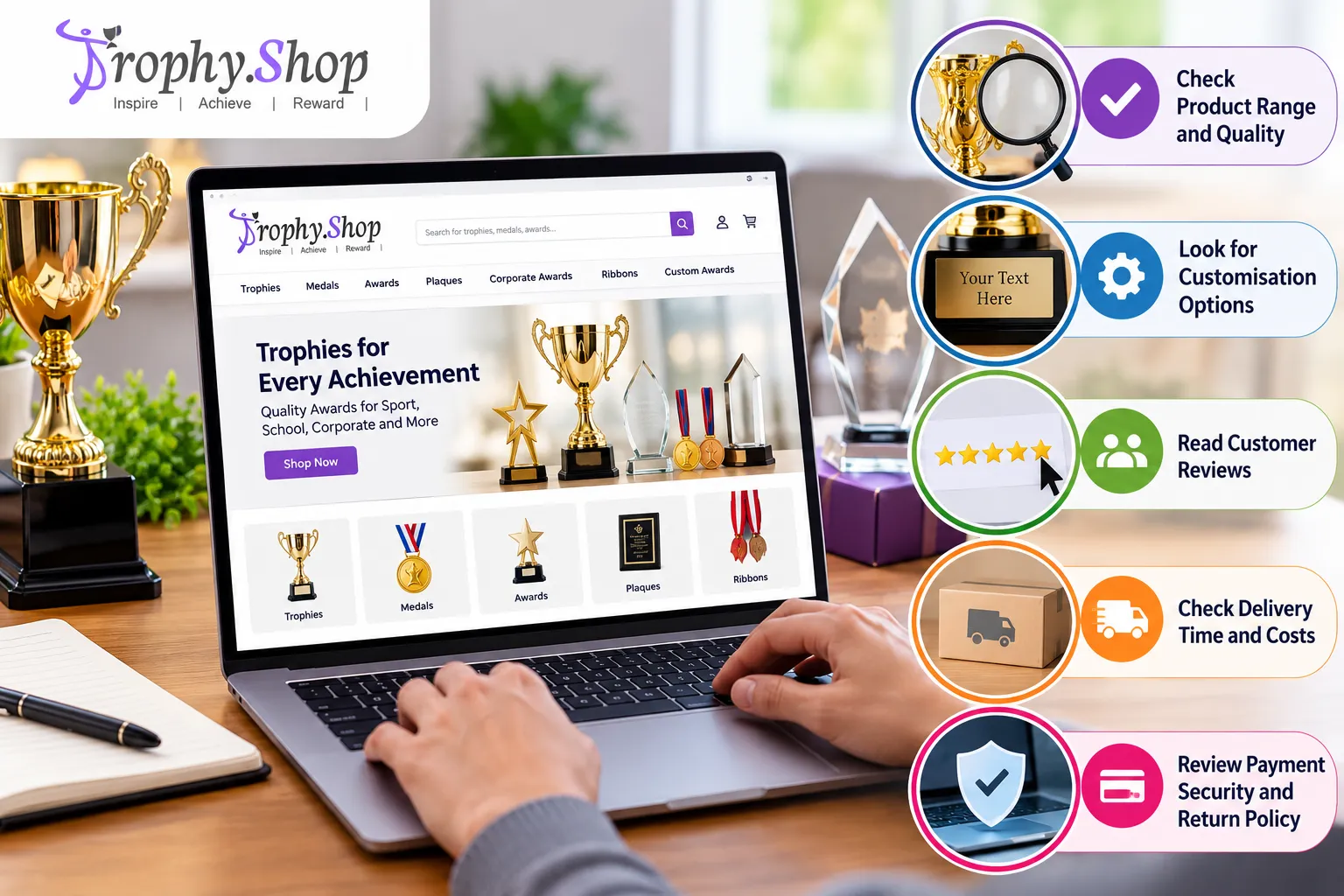
What Should You Check Before Ordering From a Trophy Store Online?

by Streamline October 16, 2026
written by Streamline

Quick answer: Before ordering from a trophy store online, check the trophy’s measured height, what it’s made of, whether engraving is included, the production time plus delivery, and what happens if a name is engraved wrongly. Then plan backwards from your presentation date, not forwards from today.

Trophies are often the last job on the presentation-night list, which is exactly when things go wrong. The trophy that looked impressive on screen arrives at half the size, a surname is misspelled, or the box turns up the morning after the event.

Nearly all of these problems can be avoided with a few checks before you pay. Whether you’re buying for a junior football club, a school or a staff awards night, these are the questions to put to any trophy shop, local or online.

1. Check the Measured Height, Not the Photo

Product photos are taken up close, so a 12cm trophy can look as grand as a 40cm one. Read the listed height and check how it’s measured. Trophy Shop Australia, for example, lists the total height from the base to the tip, rounded to the nearest centimetre. If you can’t picture it, hold a ruler against a wall.

When you browse a trophy store online, size each award by its importance. The champion’s trophy should stand tallest on the table, with runner-up and participation awards stepping down from there.

2. Match the Material to the Occasion

Resin figures suit sport, offering plenty of detail at a sensible price, and are light enough for young children to hold. Metal cups feel traditional for championships and perpetual trophies. Acrylic, glass and crystal suit corporate and formal awards, but glass and crystal are heavier, need careful packing, and can’t be re-engraved if a word is wrong. If a listing doesn’t say what a trophy is made of, ask rather than guess from the photo.

3. Ask How Engraving Works and What It Costs

Engraving is what makes a stock trophy personal, and it’s where most hidden costs and mistakes sit. Before you order, find out:

  • Is engraving included, or charged per plate or per letter?

  • How do you submit names for a large order, and can you edit them before production starts?

  • Which logo files are accepted? A vector .ai file or high-resolution PDF engraves cleanly; a screenshot from a website usually won’t.

  • Who pays if a name is engraved incorrectly?

Put your list in a spreadsheet, with the product code, award and exact wording in separate columns, and have a second person check it against the official results. Use the name each recipient actually goes by, and confirm surnames rather than typing them from memory.

4. Compare the Total Cost, Not the Headline Price

A cheaper trophy isn’t cheaper once the extras are added. If a club orders 30 trophies and engraving costs $5 a plate, that’s another $150 before freight. Add up the trophy, engraving, any logo artwork fee, presentation boxes and delivery to your postcode, then compare suppliers on that final figure.

5. Work Back From Your Presentation Date

Production and delivery are separate stages. Each trophy has to be engraved and assembled before it ships, and regional addresses can take longer to reach than capital cities. Ask the trophy shop for its production time in working days, then add freight on top.

As a guide, Trophy Shop Australia quotes seven working days for stock trophies with engraving, plus shipping, and recommends ordering two weeks to a month ahead. Aim to have everything in hand a few days early, so there’s time to unpack, count and check every plate.

6. Choose a Trophy Supply Store That Can Handle the Whole Order

Schools and clubs ordering in bulk need more than one good product. Look for a trophy supply store that carries the same design in several sizes, has enough stock for your full quantity, and also supplies medals, plaques and shields if you need a mix. Keep a note of product codes so next season’s awards match this year’s.

Ordering From Trophy Shop Australia

Trophy Shop Australia is a trophy shop in Wangara, Western Australia, supplying sporting clubs, schools, businesses and community groups nationwide. Engraving is free on all trophies and medals and is done in-house at its Wangara workshop. After checkout, customers receive a spreadsheet for the engraving details, which can be edited until production starts. Orders ship Australia-wide with StarTrack tracking, or can be collected from Wangara, Monday to Friday, 9am to 5pm. If you’d rather not order through the website, email product codes, quantities, engraving details and your required date to [email protected].

Frequently Asked Questions

How far in advance should I order trophies online?

Order two weeks to a month before your event, and earlier for large or custom orders. That leaves time for production, delivery and checking. At Trophy Shop Australia, stock trophies with engraving take seven working days to produce, plus shipping.

Is engraving included when you buy trophies online?

It depends on the supplier. Some include engraving in the trophy price, while others charge per plate or per letter, which adds up quickly on a club order. Trophy Shop Australia engraves all trophies and medals free. Ask for engraving to be itemised before comparing quotes.

What should be engraved on a trophy?

Most trophies need four details: the recipient’s name, the award or placing, the club, school or organisation, and the year. Put the name first on a trophy the winner keeps, and the award title first on a perpetual trophy that stays with the club.

Can I return an engraved trophy?

An engraved trophy is made for one person, so check the supplier’s change-of-mind policy before you order. If it arrives faulty or doesn’t match what you ordered, Australian Consumer Law entitles you to a remedy. Trophy Shop Australia replaces the plate or the whole trophy if it makes an engraving error.

What should I do if my trophy arrives damaged?

Photograph the trophy and packaging straight away, keep everything, and contact the supplier with your order number. Don’t wait until after the event. Trophy Shop Australia asks for damage claims in writing, with photos, within 14 days.

How do I choose a reliable trophy supply store?

Choose one that publishes its production times, includes or clearly itemises engraving, lets you check names before production, and stocks matching designs in several sizes. A physical address, clear contact details and a written policy for engraving errors are good signs too.

October 16, 2026 0 comment
0 FacebookTwitterPinterestEmail
Gadgets

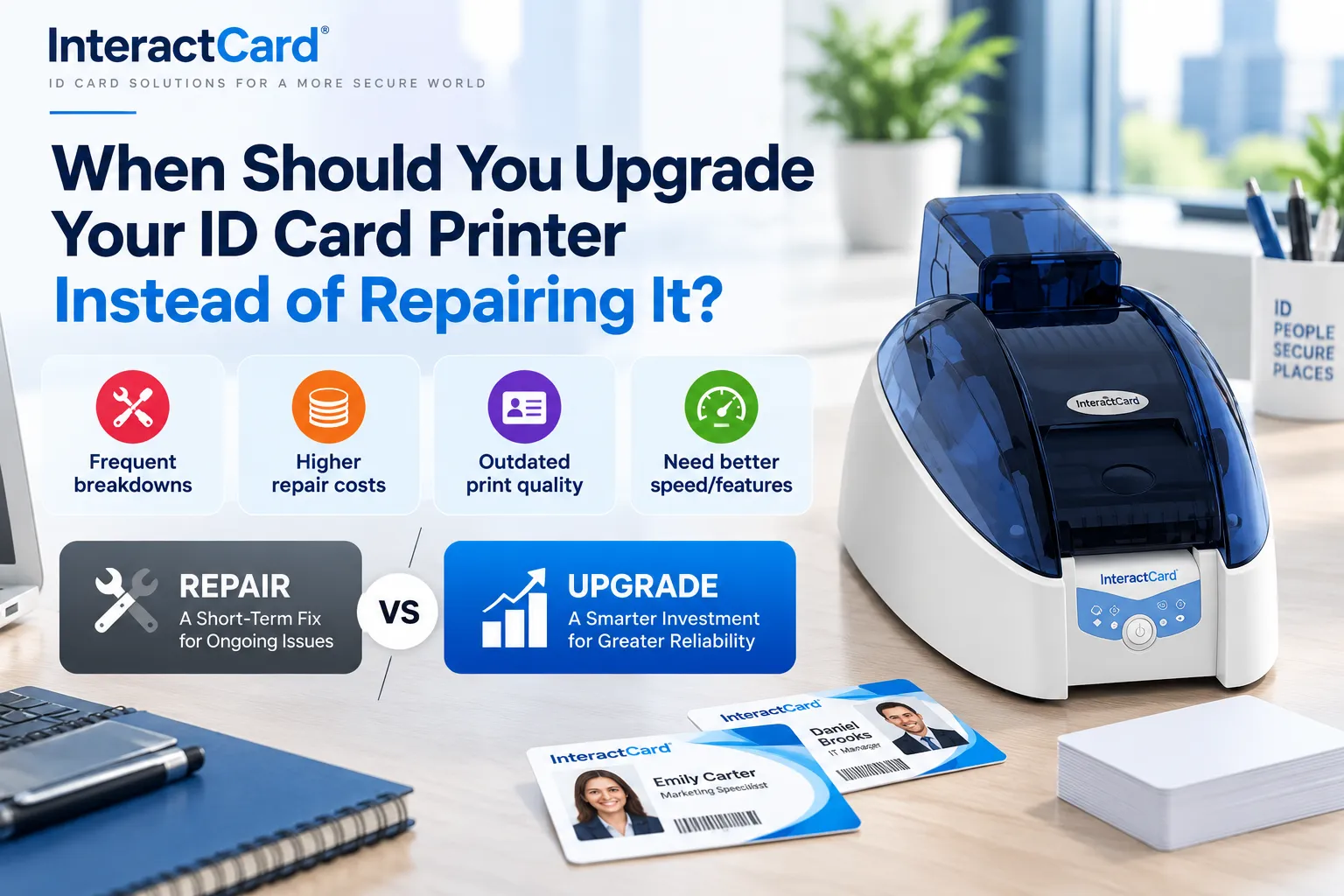
When Should You Upgrade Your ID Card Printer Instead of Repairing It?

by Streamline October 16, 2026
written by Streamline

Your ID card printer has started leaving white lines across staff photos, or it jams every third card. Before you book a repair or order a new machine, it’s worth working out which option actually saves money.

A cheap fix on a reliable printer is usually the right call. Paying to keep an old, unsupported machine alive often isn’t. Here’s how to tell the difference.

Rule out the simple fixes first

Many faults that look terminal are really maintenance issues. Faded colours, streaks and feeding errors often trace back to dirty rollers, the wrong card thickness or non-genuine ribbons. Run a full clean with the manufacturer’s kit, check your ribbons and cards are approved, and update the driver and firmware.

If problems keep coming back after that, look for these warning signs:

  • Frequent jams, even with clean rollers and approved cards

  • White lines or gaps in printed images, often a printhead fault

  • Communication errors, or ribbons not being recognised

  • A rising number of rejected cards

One sign on its own may be fixable. Several together usually mean the machine is near the end of its working life.

Repair or replace: compare the real costs

Ask for a written repair quote that lists the fault, parts and labour. Then weigh it against the price of a suitable new printer.

A simple rule of thumb: if the printer is otherwise reliable and the quote is small, repair it. If the quote is approaching half the replacement price, or other parts are also wearing out, an upgrade deserves a serious look. A printhead failure is often the tipping point on older entry-level models.

Don’t forget the hidden costs of keeping an old machine: wasted cards and ribbon, staff time spent restarting jobs, and downtime during busy periods such as enrolment or onboarding.

Quick guide: repair or upgrade?

Situation

Repair

Upgrade

Minor jam or dirty rollers

Clean and service

Not needed

Printhead failure on a newer printer

Usually worth it

Rarely needed

Printhead failure on an old entry-level model

Only if the quote is low

Often better value

Faults that keep returning

Only if a lasting fix exists

Usually the better choice

Printing volume has outgrown the printer

Won’t solve it

Yes

No driver updates or spare parts

Short-term only

Yes

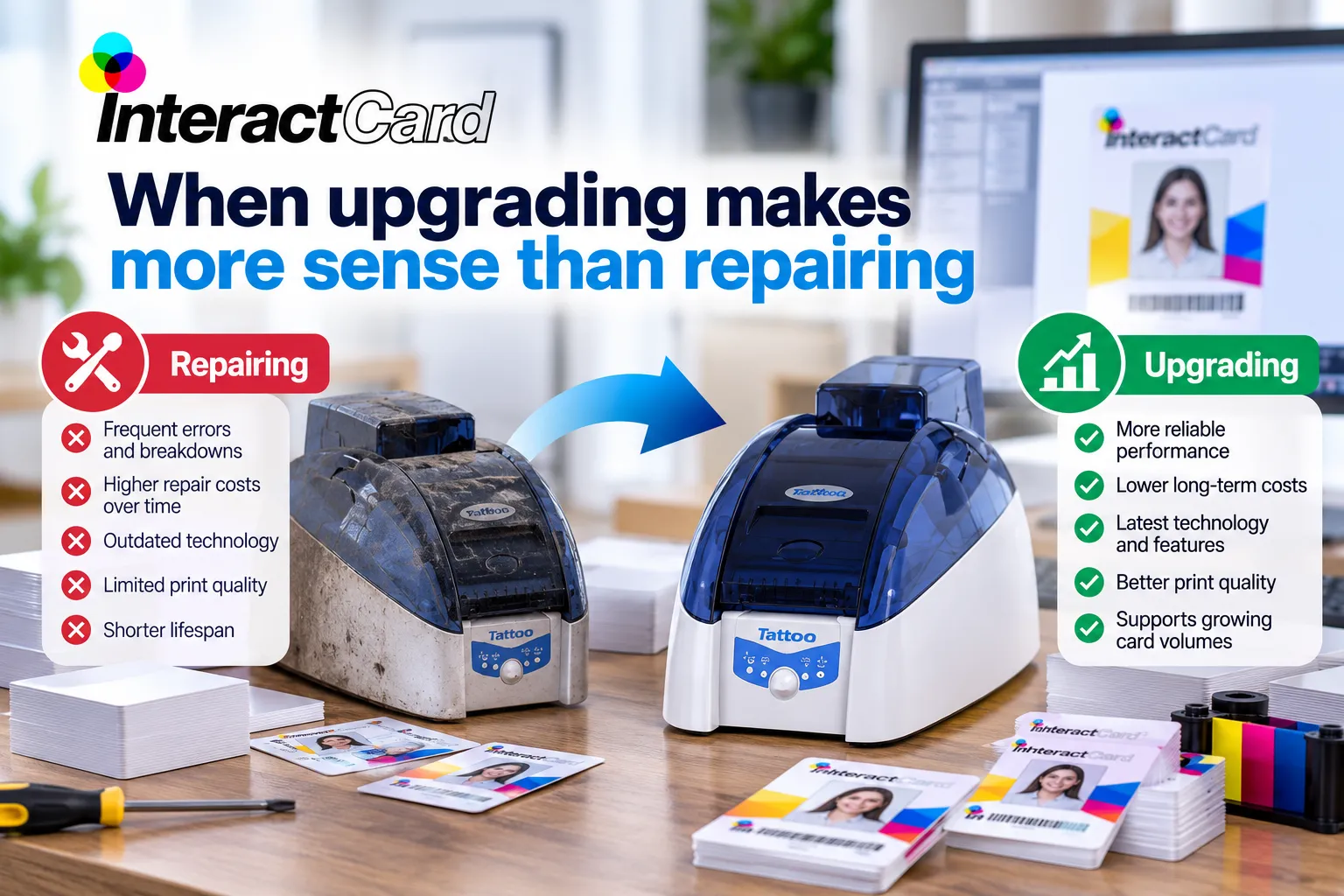
When upgrading makes more sense than repairing

Sometimes the printer still works but no longer fits the job.

Your volume has grown. A model bought for 30 cards a month can become a bottleneck at several hundred. A newer printer for ID card printing with a bigger feeder, faster output and batch printing from a database can save hours every month.

You need new card features. Access control cards may need magnetic stripe or smart-card encoding, and some IDs need details on the back. The Evolis Primacy 2 accepts dual-sided and encoding upgrades, while 600 dpi retransfer printers such as the Agilia suit secure, edge-to-edge cards.

Support has ended. If the driver won’t run on your current version of Windows, or spare parts and firmware have dried up, every repair buys less time. A currently supported identity card printer gives you ongoing access to parts, updates and help.

Why choose InteractCard

InteractCard helps Australian organisations keep their card printers running, and pick the right upgrade when the time comes.

  • Authorised Evolis distributor: genuine printers, ribbons, cards and parts.

  • A model for every workload: the compact Badgy, Zenius 2 and Primacy 2, Agilia and Avansia retransfer printers, and the Quantum 2 for bureau volumes.

  • Support that keeps you printing: how-to videos, firmware update guides and remote support for Evolis card printers.

  • Everything else you need: ribbons, blank cards, cleaning kits and card design software.

  • Quick delivery: orders placed before 2pm on business days are dispatched the same day.

Frequently asked questions

How long does an ID card printer last?

There’s no fixed lifespan. A well-maintained ID card printer can stay in service for several years. How long yours lasts depends on how much you print, how often you clean it, whether you use approved consumables, and how long the manufacturer keeps supplying parts and drivers.

Is it worth repairing an old ID card printer?

Yes, if the fault is minor, the printer still meets your needs and parts are available. If the repair costs a large share of a new printer’s price, faults keep returning or the model is no longer supported, upgrading is usually better value.

What are the signs an ID card printer needs replacing?

The main signs are frequent jams despite cleaning, persistent white lines from a damaged printhead, rising card wastage, unsupported drivers and hard-to-find spare parts. A printer that can’t keep up with your volume or the card features you now need may also be due for replacement.

What should I look for in a new identity card printer?

Start with your monthly volume and biggest batches. Then decide on single or double-sided printing, any magnetic stripe or smart-card encoding, and the design software you’ll use. Finally, check the ribbon cost per card and make sure genuine supplies and local support are available.

Will upgrading my ID card printer reduce printing costs?

It can, but not automatically. A newer printer may waste fewer cards, need fewer repairs and save staff time. Running costs still depend on ribbon yield, card prices and how much you print, so compare those before you buy.

Final thoughts

Repair when the fault is minor and the printer still suits your needs. Upgrade when repairs keep coming back, support has ended or the machine can’t handle your volume or card features. Whichever you choose, judge any printer for ID card printing on its total cost over the next year or two, not just today’s quote.

About InteractCard

For more than 20 years, InteractCard has helped Australian organisations print their own ID cards. From its base in Wantirna South, Melbourne, the team supplies Evolis card printers as an authorised distributor, along with consumables, design software and ongoing support for workplaces, schools, clubs, RTOs and government agencies nationwide. Visit interactcard.com.au to compare models.

October 16, 2026 0 comment
0 FacebookTwitterPinterestEmail
Business

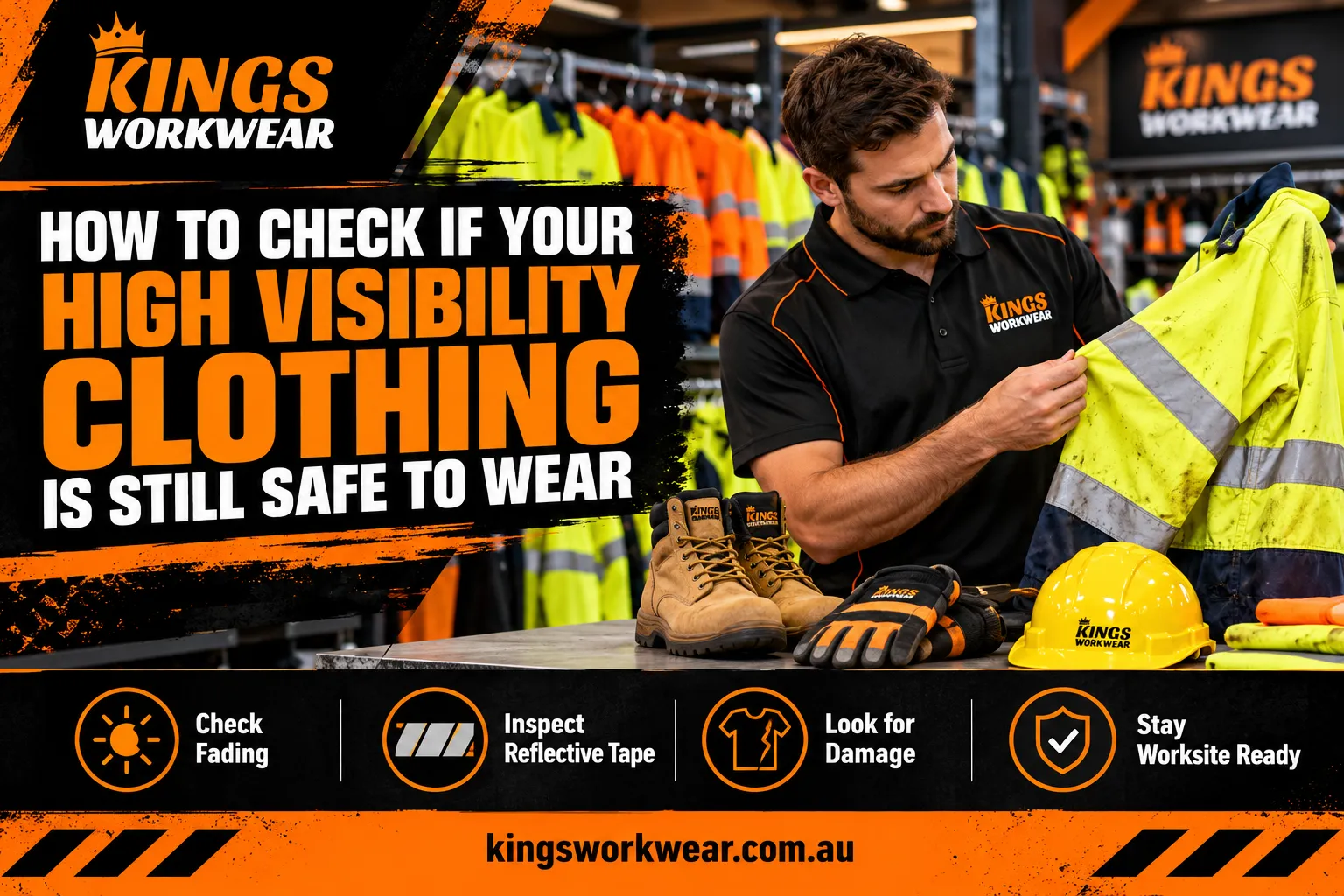
How to Check If Your High Visibility Clothing Is Still Safe to Wear

by Streamline October 16, 2026
written by Streamline

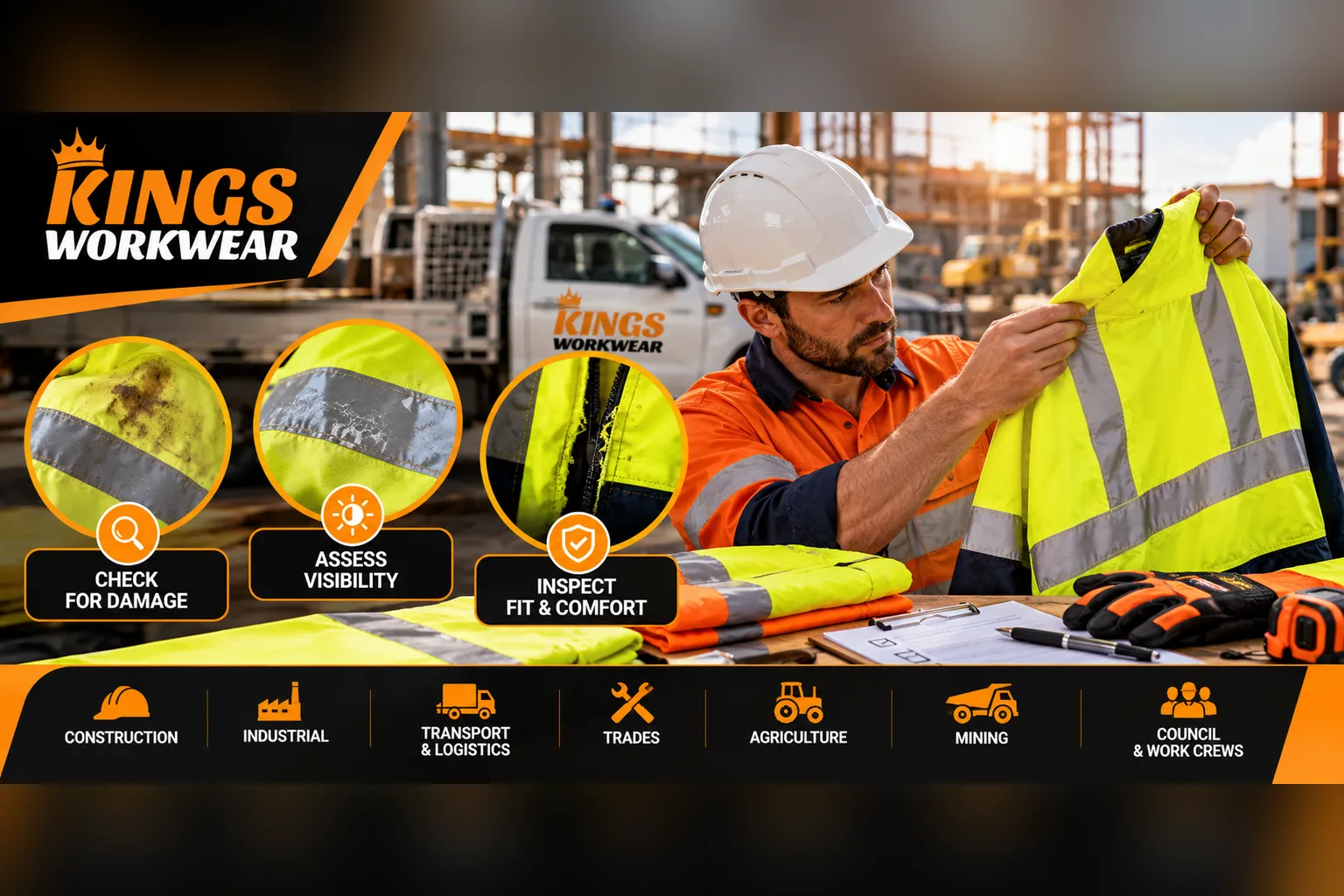
A hi vis shirt can look fine from across the yard and still be letting you down. Months of Perth sun, weekly washes and the odd brush with a pallet slowly dull the fluoro and wear the reflective tape, and nobody notices until someone asks why the night crew is hard to see. Knowing what to look for keeps your high visibility clothing doing its job.

Quick answer: check four things before each shift: the fluoro colour, the reflective tape, the fabric and seams, and any stains covering visible areas. Then confirm the garment’s class still suits the day’s work. Retire anything badly faded, torn through a visible panel, permanently stained, past the maker’s wash limit, or with tape that has cracked or lifted.

1. Check the Fluoro Colour in Daylight

UV, hot washes and sweat all fade fluoro fabric over time. Hold the garment up in natural light and look for dull patches, uneven colour, or washed-out shoulders and sleeves, which usually go first.

The easiest test is to compare it with a new garment of the same style. A clear difference is a warning sign, though a side-by-side look isn’t a lab test. If you’re unsure whether it still meets the requirement, take it out of service until someone competent checks it.

2. Inspect Every Strip of Reflective Tape

Reflective tape is what makes you visible under headlights and site lighting, so it matters most for night and low-light work. Run your fingers along every strip and look for:

  • Cracks or crazing across the surface

  • Edges lifting away from the fabric

  • Missing sections or heavy scuffing

  • Paint, grease or grime sitting on top

Some workers shine a torch on the tape to spot dead areas. That’s handy for finding obvious damage, but it isn’t proof of performance. Bright fluoro doesn’t make up for damaged tape if your role needs night visibility.

3. Look for Tears, Holes and Failed Seams

Hi vis work clothes like pants and overalls cop the most punishment at the knees, seat and pocket corners. Check those spots, along with cuffs, hems, zips and buttons.

A small snag on a hem is cosmetic. A tear through a fluoro panel or beside the tape is not. Resist the urge to patch it or stick on hardware-store reflective tape, because ordinary repairs can mean the garment no longer meets its rating.

4. Deal With Grease, Paint and Stains

Dirt on fluoro fabric or tape reduces how well you’re seen. Wash the garment as the label directs, then check again. If large stains won’t shift, or anything permanently covers the tape, replace it.

Clothing exposed to hazardous chemicals is a different matter. Follow your workplace’s decontamination procedure instead of taking it home for an ordinary wash.

5. Follow the Care Label Every Time

The laundry is where a lot of hi vis is quietly ruined. Many care labels advise cooler washes, no bleach or fabric softener, turning the garment inside out, and keeping tumble dryers and irons away from the tape.

Some manufacturers also state a maximum number of wash cycles. If your business uses an industrial laundry, track the count. Once a garment reaches that limit, replace it even if it still looks decent.

6. Make Sure It Still Suits the Job

Gear in perfect condition can still be wrong for the work. If someone moves to night shifts or roadside jobs, a day-only Class D shirt may need swapping for Class D/N under AS/NZS 4602.1. Check the fit too, because shrunk or stretched garments can ride up, gape or end up hidden under other layers.

Repair or Replace?

Minor, non-critical repairs, such as a loose seam well away from the visible panels, can be fine if the manufacturer allows them. Anything affecting the fluoro fabric or tape is usually a replacement job. Keep spare hi vis workwear, such as taped vests, on hand so damaged gear can be swapped the same day rather than worn “just for this week”.

Replacing Worn Gear

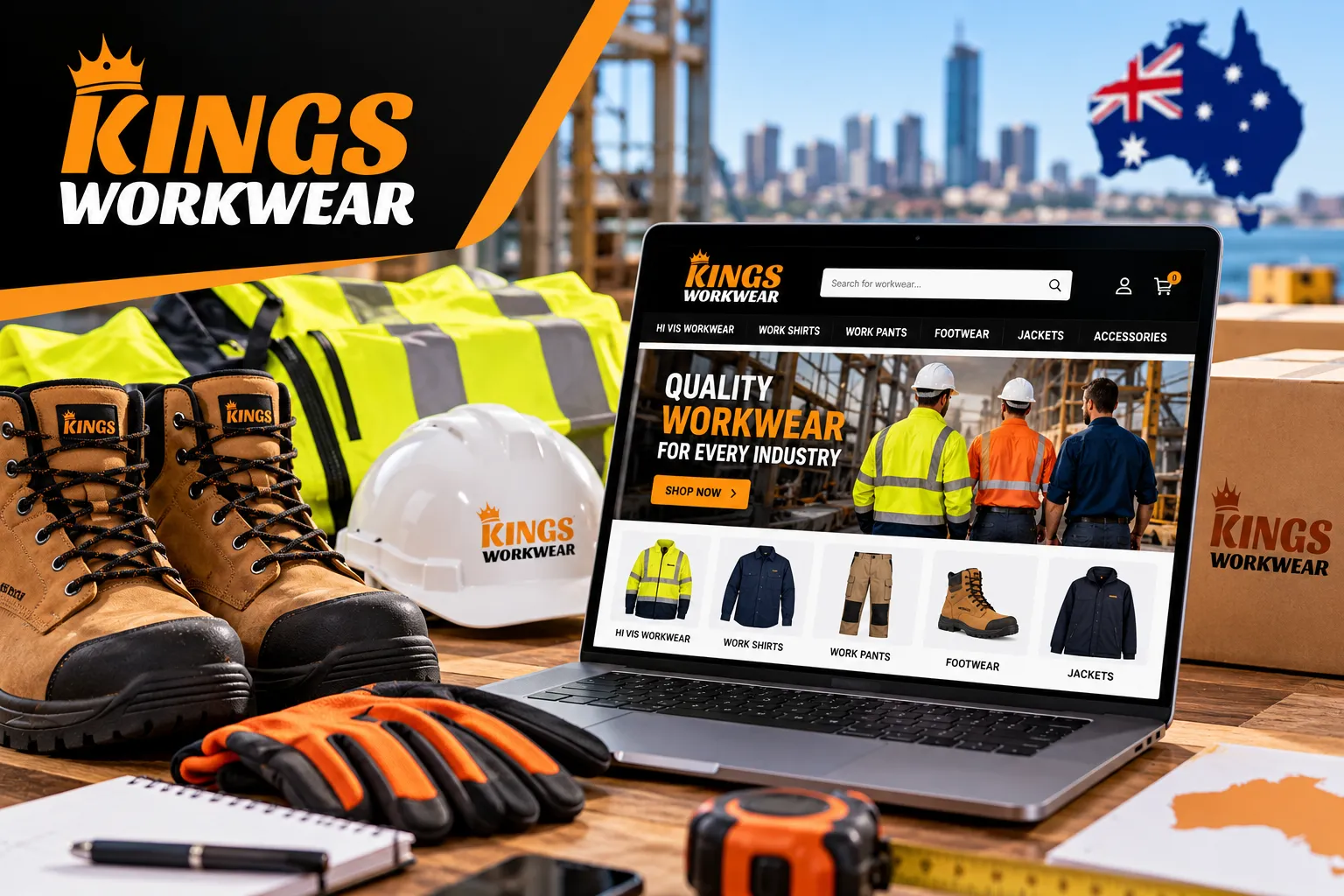
When it’s time to replace, Kings Workwear’s Southern River store and website carry hi vis polos, work shirts, jackets, hoodies, overalls, pants and vests, both taped and untaped, in men’s and women’s cuts. Match the class on each label to what your site specifies.

Frequently Asked Questions

How do I know if my hi vis is still safe to wear?

Check the fluoro colour, reflective tape, seams and stains before each shift, and make sure the garment’s class suits your work. If the fluoro looks dull, the tape has cracked or lifted, or a visible panel is torn, stop wearing it and get it replaced.

Can faded hi vis work clothes still be worn?

Not if the fading is significant. Faded fluoro is harder to see in daylight and may no longer meet the garment’s rating. Compare it with a new item of the same style, and if there’s a clear difference, take it out of service.

Does reflective tape wear out?

Yes. Washing, abrasion, heat and contamination gradually crack, peel and dull reflective tape. Some manufacturers list a maximum number of wash cycles on the care label. Damaged tape cuts night-time visibility even when the fluoro fabric still looks bright.

Can you repair hi vis clothing?

Only minor, non-critical repairs, and only if the manufacturer allows it. Patching fluoro panels or adding ordinary reflective tape can mean the garment no longer meets its standard. If the visible materials are damaged, replacement is the safer option.

Does hi vis clothing expire?

There’s no universal expiry date. Hi vis lasts until it’s faded, damaged, permanently stained or past the manufacturer’s stated wash or service limit, whichever comes first. Regular checks tell you when that point has arrived.

How should you wash hi vis workwear?

Follow the care label. Many labels recommend a cooler wash, no bleach or fabric softener, turning the garment inside out and line drying. Keep irons and tumble dryers away from the reflective tape unless the label says otherwise.

Final Word

Hi vis only protects you while it can still be seen. Make the quick check part of every pre-start, wash it the way the label says, and replace gear as soon as it fails. That habit costs far less than a near miss.

October 16, 2026 0 comment
0 FacebookTwitterPinterestEmail
Health

What Should Brisbane Men Know About Maintaining Long-Term Vitality?

by Streamline October 16, 2026
written by Streamline

Maintaining good health and personal confidence is important at every stage of life. However, busy work schedules, family responsibilities and everyday pressures can make personal wellbeing difficult to prioritise.

For Brisbane men, long commutes, irregular sleep and limited physical activity may gradually affect energy levels, motivation and emotional wellbeing.

Fortunately, maintaining long-term vitality does not require expensive fitness programmes or complicated lifestyle changes. Small, consistent improvements in everyday habits can support physical health, emotional balance and quality of life.

Understanding health products and recognising when professional advice is needed are also important parts of responsible self-care.

Here are practical ways Brisbane men can maintain healthy routines and look after their wellbeing over time.

Why Is Long-Term Vitality Important for Men?

Vitality involves more than physical strength or maintaining energy throughout the day. It also includes cardiovascular health, emotional wellbeing, healthy relationships, nutrition and adequate rest.

These factors often influence one another.

For example, insufficient sleep can affect concentration and motivation, while ongoing stress may interfere with eating habits and personal relationships.

Rather than focusing on quick improvements, men can benefit from developing sustainable routines that support their overall health.

A balanced approach also includes recognising changes that may require professional medical attention.

1. Stay Physically Active Throughout the Week

Regular physical activity supports cardiovascular fitness, muscle strength, mobility and general wellbeing.

Brisbane offers many opportunities to remain active outdoors. Walking along the Brisbane River, exploring New Farm Park or enjoying recreational activities around South Bank can make exercise more enjoyable.

Even men with demanding schedules can incorporate movement into everyday routines.

Practical ways to stay active include:

  • Taking short walks during work breaks.

  • Cycling along suitable local pathways.

  • Participating in recreational sports.

  • Including strength exercises twice weekly.

  • Walking part of a daily commute.

  • Reducing prolonged periods of sitting.

Australian physical activity recommendations encourage adults to remain active regularly and include muscle-strengthening activities throughout the week.

The most effective exercise routine is one that suits individual fitness levels and can be maintained consistently.

2. Support Everyday Energy Through Balanced Nutrition

Food choices influence physical health, energy metabolism and normal bodily functions.

Busy schedules sometimes encourage skipped meals, frequent takeaway food or excessive reliance on caffeinated drinks.

However, healthier eating does not require complicated meal preparation.

A balanced diet may include:

  • Whole grains: Oats, brown rice and wholegrain bread provide carbohydrates and fibre.

  • Protein sources: Lentils, beans, chickpeas, tofu, dairy, eggs and lean meats contribute to muscle maintenance.

  • Vegetables and fruits: These provide essential vitamins, minerals and dietary fibre.

  • Healthy fats: Nuts, seeds, olive oil and avocados contain unsaturated fats.

Preparing meals ahead of demanding workdays may help maintain consistent eating habits.

Nutritional supplements may be appropriate in certain circumstances, but they should not automatically replace a balanced diet.

3. Stay Hydrated in Brisbane’s Warm Climate

Brisbane’s subtropical climate brings warm temperatures and humid conditions, particularly during summer.

Men working outdoors or participating in physical activities may lose additional fluids through sweating.

Maintaining adequate hydration is therefore important for everyday wellbeing.

Carrying a reusable water bottle, drinking regularly and taking appropriate breaks during outdoor activities can help support fluid balance.

Those working in construction, landscaping or other physically demanding industries may need additional precautions during hot weather.

Individual hydration requirements vary depending on physical activity, environmental conditions and medical circumstances.

4. Manage Stress and Prioritise Quality Sleep

Stress can influence physical comfort, emotional wellbeing, concentration and personal confidence.

Workplace responsibilities, financial commitments and family pressures may create ongoing challenges.

Although occasional stress is normal, persistent pressure can interfere with sleep, relationships and everyday activities.

Simple habits such as spending time outdoors, maintaining friendships, practising mindfulness and setting reasonable work-life boundaries may help manage stress.

Sleep deserves equal attention.

Most adults generally need approximately seven to nine hours of sleep each night, although individual requirements vary.

Practical ways to improve sleep include:

  • Maintaining consistent sleeping and waking times.

  • Reducing caffeine intake later in the day.

  • Creating a comfortable bedroom environment.

  • Limiting screen use when it disrupts sleep.

  • Developing a relaxing evening routine.

Persistent fatigue, loud snoring or frequent sleep interruptions should be discussed with a healthcare professional.

5. Understand Men’s Wellness Products Responsibly

Alongside healthy lifestyle habits, some Brisbane men research supplements and specialised health products online.

However, products advertised for male vitality or personal confidence do not necessarily belong to the same category.

Some contain nutritional ingredients, while others contain pharmaceutical substances requiring medical supervision.

For example, searches involving kamagra brisbane may lead consumers to information about sildenafil-containing medicines.

Sildenafil is a prescription-only medicine in Australia. It should not be confused with an ordinary dietary supplement or general energy product.

Men researching kamagra brisbane online may also encounter different product formulations, including tablets and oral jellies.

However, a different formulation does not automatically make a medicine safer, faster acting or more effective.

Medicine suitability depends on active ingredients, formulation, manufacturing quality and individual health circumstances.

Sildenafil can interact dangerously with nitrate medicines used for certain heart conditions, potentially causing a serious reduction in blood pressure.

Professional medical guidance is therefore important before considering medicines containing this ingredient.

6. Make Informed Decisions About Online Health Products

Online shopping provides convenient access to product information, but prescription medicines require additional caution.

Attractive packaging, customer reviews and promotional pricing cannot establish whether a product is genuine or approved for Australian supply.

For instance, people searching for buy kamagra brisbane should understand that an online product listing does not confirm lawful availability or medical suitability.

The Therapeutic Goods Administration (TGA) warns that unapproved medicines purchased through unreliable websites may contain incorrect ingredient quantities, undeclared substances or other quality problems.

Before considering prescription medicines, consumers should:

  • Consult a qualified Australian healthcare professional.

  • Check relevant information through the Australian Register of Therapeutic Goods.

  • Use legitimate pharmacies for prescribed medicines.

  • Review available ingredient and safety information.

  • Avoid sellers offering prescription medicines without valid prescriptions.

Reliable healthcare information should take priority over convenience or exaggerated promotional claims.

7. Maintain Social Connections and Attend Health Check-Ups

Long-term vitality also involves emotional wellbeing and preventive healthcare.

Spending time with friends, family or community groups can provide emotional support and opportunities for relaxation.

Joining a local sports club, participating in recreational activities or maintaining enjoyable hobbies may contribute to a more balanced lifestyle.

Regular health assessments are equally valuable.

Depending on age, medical history and individual risk factors, a healthcare professional may recommend monitoring blood pressure, cholesterol, blood glucose or other health indicators.

Persistent fatigue, unexplained physical changes or ongoing personal health concerns should not automatically be dismissed as normal ageing.

Seeking appropriate advice can help identify concerns that require further assessment.

Frequently Asked Questions

What daily habits help Brisbane men maintain vitality?

Regular physical activity, nutritious meals, sufficient sleep, adequate hydration and effective stress management can support general wellbeing.

How can busy men maintain everyday energy?

Consistent meals, regular movement, appropriate rest and realistic work-life boundaries may help maintain healthier daily routines.

Can stress affect men’s personal confidence?

Yes. Persistent stress may affect mood, sleep, concentration and relationships. Ongoing concerns should be discussed with a qualified healthcare professional.

Are all men’s vitality products nutritional supplements?

No. Some contain pharmaceutical ingredients and are regulated as medicines. Marketing descriptions do not change their legal classification.

Conclusion

Maintaining long-term vitality requires consistent attention to physical and emotional wellbeing.

For Brisbane men, regular exercise, balanced nutrition, adequate hydration, quality sleep and effective stress management provide a useful foundation for healthier living.

Maintaining supportive relationships and attending appropriate health assessments are equally important.

When researching specialised wellness products, understanding medicine regulations and potential health risks can help consumers make responsible decisions.

Rather than relying on quick solutions, long-term wellbeing is best supported through sustainable habits, reliable information and appropriate medical care.

Disclaimer: This article is intended for general educational purposes only and does not replace professional medical advice. Sildenafil-containing products are prescription-only medicines in Australia. Consult a qualified healthcare professional before using medication and verify that any medicine is appropriately regulated and lawfully supplied.

October 16, 2026 0 comment
0 FacebookTwitterPinterestEmail
Business

How to Choose a Workwear Clothing Store That Suits Every Industry

by Streamline October 16, 2026
written by Streamline

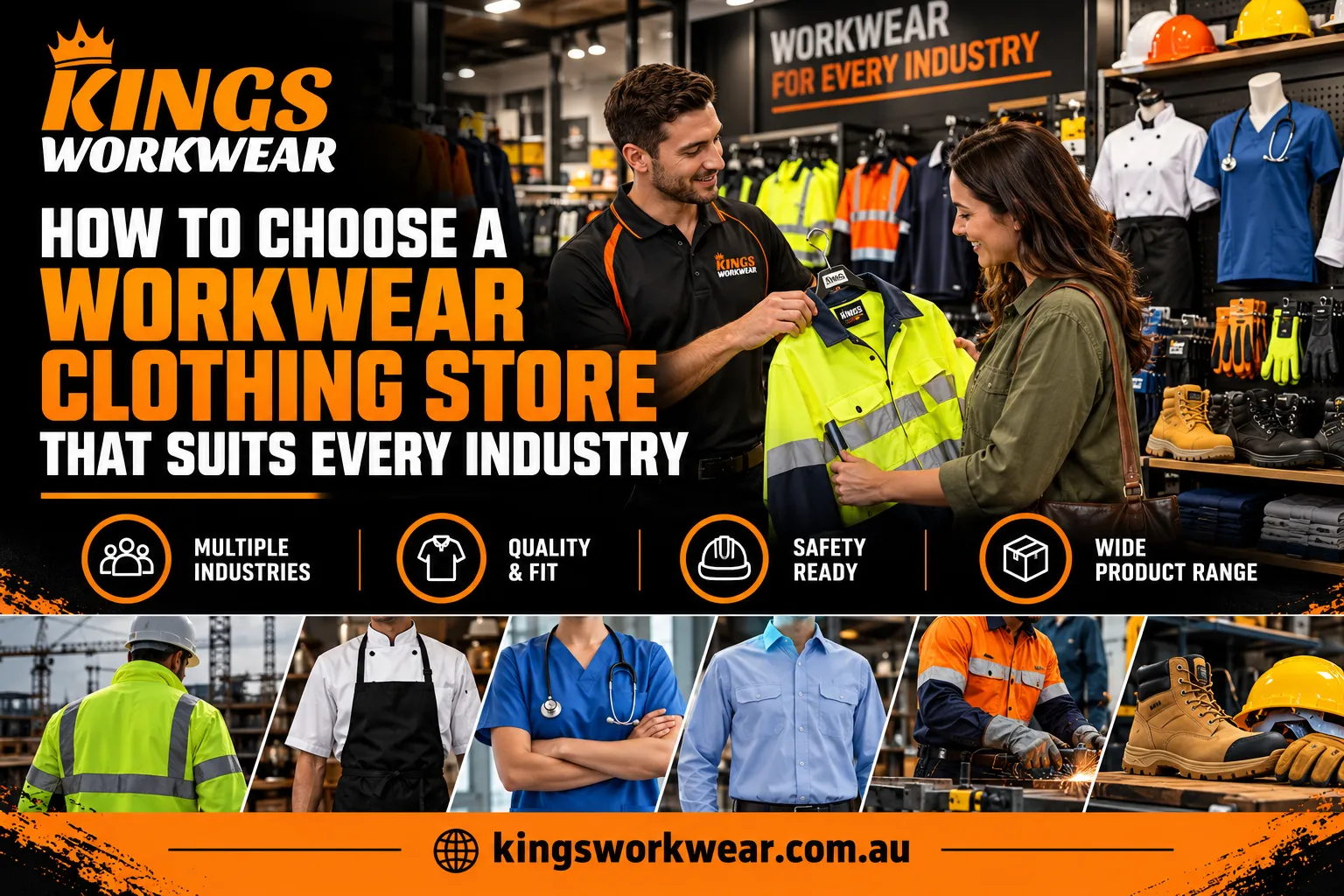
Kitting out one tradie is easy. Kitting out a business with a site crew, a warehouse team, two receptionists and a café out the front is another job entirely. Each group works in different conditions and needs different gear, and not every shop can supply all of it.

Quick answer: the right workwear clothing store carries dedicated ranges for each industry you employ in, lists fabric, sizing and safety details for every product, offers men’s and women’s fits, and can brand and reorder uniforms consistently. If you’d need three suppliers to cover your team, keep looking.

1. Start With a Role-by-Role List

Before you compare stores for work clothes, write down every role in your business and what each person actually does all day.

Role

Usually needs

Check for

Trades and construction

Drill pants, work shirts, safety boots

Reinforced knees, toe protection

Warehouse and logistics

Stretch pants, hi vis polos

Room to bend and lift, day/night hi vis

Healthcare

Scrubs, tunics, non-slip shoes

Easy-care fabric, comfort on long shifts

Hospitality

Chef jackets, aprons, chef pants

Breathable, heat-friendly fabric

Office and front desk

Corporate shirts, blouses, trousers

Consistent colours and fits

Treat the table as a starting point. Your site rules and PPE requirements always come first.

2. Check the Store Stocks Every Category You Need

A workwear clothing store built for multiple industries organises its range that way: general workwear, hi vis, work boots, healthcare, hospitality and chef wear, corporate office wear and PPE, each with its own section. If scrubs are buried under “miscellaneous”, that tells you where the store’s focus lies.

Look at depth, not just breadth. One scrub style in three colours won’t cover a clinic. Check that women’s cuts exist in every category you need, not just a token polo. Poor fit is uncomfortable all shift, and loose garments can snag on equipment.

3. Match Fabric and Features to the Job

Heavier doesn’t always mean better. A thick cotton drill pant suits a bricklayer but would be miserable in a commercial kitchen. Healthcare and hospitality uniforms go through hot washes several times a week, so easy-care poly-cotton blends often hold up better there. Warehouse staff tend to want stretch panels, while trades want reinforced knees and tool pockets.

Climate matters too. Perth summers call for lightweight, vented shirts, while early winter starts need a fleece or jacket that layers over hi vis rather than hiding it.

4. Make Safety Gear Part of the Plan

When you’re buying for several teams, PPE is the easiest thing to forget. Confirm what each role needs: safety boots with the right toe cap, gloves, eye and hearing protection, and hi vis rated for daytime, night-time or both.

A good store states those ratings on the product page instead of leaving you to guess. Bright colour alone doesn’t make a shirt compliant hi vis, so check the label against your site’s requirements.

5. Plan Branding and Repeat Orders Up Front

A simple uniform plan saves hours every time someone new starts. Write down:

  • Approved garments and colours for each department

  • Logo position and branding method (embroidery or print)

  • Each employee’s size

  • Who reorders, and how often

Ask the store about minimum quantities, artwork files and turnaround times before you commit. Keeping style codes on file means the next order matches the last one.

6. What to Expect When Buying Workwear Online in Australia

For multi-site businesses and shift workers, ordering workwear online Australia-wide is often the only practical option. A good online store lets you browse by industry, links each product to the brand’s size guide, shows current stock, and spells out dispatch times and return conditions before checkout.

For bulk orders, ask the store to confirm stock and lead times in writing. If it has a physical shop, try a few sizes in person first to save a round of exchanges.

Why Kings Workwear Suits Mixed Teams

Kings Workwear is one of the Perth stores for work clothes that dresses several industries under one roof, with a shop in Southern River and a full online catalogue. The range covers trades workwear, hi vis, work boots, PPE, corporate office wear, medical scrubs, lab coats and chef wear. Bisley, KingGee, Hard Yakka, Syzmik and JB’s Wear are among the labels stocked, and logos can be embroidered or DTF-printed onto team uniforms. Check specs and sizing before placing a team order.

Frequently Asked Questions

Can one workwear clothing store supply uniforms for different industries?

Yes, if it stocks dedicated ranges for each role. Look for separate sections for trades workwear, hi vis, healthcare, hospitality, corporate wear and PPE, with men’s and women’s fits. Using one supplier also keeps branding and reordering consistent across departments.

Can I buy workwear online in Australia for a whole team?

Yes. Most stores selling workwear online Australia-wide take bulk orders. Before ordering, collect each employee’s measurements, check them against the brand’s size chart, confirm stock and dispatch times for large quantities, and ask how exchanges work if a size is wrong.

What work clothes do different industries need?

Trades need durable drill pants, work shirts and safety boots. Warehouse staff need flexible pants and hi vis. Healthcare workers need easy-care scrubs, hospitality staff need breathable chef wear, and office teams need consistent corporate shirts and trousers.

How do I plan a uniform for a business with several departments?

List each role, the garments and colours it needs, any safety requirements, logo placement and every employee’s size. Then nominate one person to manage reorders. Keeping style codes on file makes it quick to kit out new starters.

Can I put my company logo on hi vis workwear?

Usually, yes. Keep logos small and off the reflective tape so the garment keeps enough visible fluoro and reflective area to meet its rating. Confirm placement with the store and check your site’s requirements before ordering branded hi vis.

Where can I find stores for work clothes in Perth?

Perth has a number of dedicated workwear stores. Kings Workwear in Southern River, close to Canning Vale and Gosnells, stocks trades, hi vis, healthcare, hospitality and corporate ranges, and its full catalogue is available to order online.

Final Word

The best workwear clothing store for a mixed team is the one that can dress every role properly, not just the one with the longest product list. Start with your role-by-role list, check each category against it, and sort out branding and reorders before the first box arrives.

October 16, 2026 0 comment
0 FacebookTwitterPinterestEmail
Gadgets

How to Prepare Your Perth Property for Professional CCTV Camera Installation

by Streamline October 16, 2026
written by Streamline

Most people put their energy into choosing cameras and give installation day barely a thought. Yet a blocked manhole, a router hidden behind the TV or a ute parked under the eaves can slow a job down or force a compromise on where cameras go. An hour of preparation makes a real difference. Here’s how to get a Perth home or business ready for a professional install.

1. Decide what you want the cameras to cover

Before arranging CCTV camera installation Perth, walk the property and list the places you’d want footage of if something went wrong. At home that’s usually the front door, driveway, garage, side gates, back door and any shed. Businesses should add stockrooms, loading docks, staff entries and the customer entrance.

Beside each one, note the job: watching cars come and go, or getting a clear look at a face at the door. You don’t need to pick exact mounting points. A good installer will confirm those, and flag blind spots, at the site assessment.

2. Check roof access and how the building is put together

Cable routes decide how long a job takes. A single-storey home with an open roof space is usually simple. Double-storey homes, flat roofs, brick or concrete walls and detached garages take more planning, and sometimes cost more.

Make sure the manhole is reachable, and mention anywhere awkward, such as high gables or courtyards without ladder access. Leave the roof cavity and switchboard to the professionals, though. Your job is to share information, not do the work.

3. Choose a spot for the recorder

The network video recorder (NVR) holds your footage, so it needs a safe home. A linen cupboard, study or comms cabinet often works. It needs a power point, a cable run to your router if you want phone viewing, and enough airflow to stop it overheating in a Perth summer. Keep it out of plain sight so an intruder can’t walk off with the recording.

4. Sort out your internet connection

An NVR records happily without the internet, but live viewing on your phone and motion alerts need a working connection. Before your CCTV installation Perth appointment, find your modem or router, check it has a spare network port, and make sure you can log in to it. Businesses should involve whoever manages their IT before new devices join the network.

5. Clear the way for installation day

A few small jobs save the technician a lot of time:

  • Move cars, trailers and boats away from walls where ladders will go.

  • Shift outdoor furniture and pot plants from under camera positions.

  • Unlock side gates, sheds and garages.

  • Keep pets inside or away from the work area.

  • Empty the cupboard you’ve chosen for the recorder.

At a business, let staff know if an entry will be closed for part of the day.

6. Look for obstructions, glare and privacy issues

Stand where each camera might go and look for anything in the way: overhanging branches, shade sails, signage or the spot where a delivery van always parks. Check again late in the afternoon, when low sun can flood a west-facing lens, and after dark, when an unlit corner may need colour night vision or extra lighting.

Think about neighbours too. Cover your own entries and driveway, not next door’s windows or yard. In WA, the Surveillance Devices Act 1998 governs the recording of private activities and conversations, so leave audio off unless you’ve had advice.

7. Read your quote before the job starts

A proper quote spells out the camera models and resolution, NVR and hard drive size, cabling, installation, testing, app setup and warranty, plus any extra charge for two-storey work or long cable runs. If something you expected isn’t listed, ask before the day rather than on it.

8. Know what a proper handover looks like

When booking security camera installation Perth, ask how the system will be handed over. Before the technician leaves, each camera’s aim, focus and night picture should be confirmed, the date and time set, and the app installed on your phone. Make sure you can watch live footage, find a recording and export a clip, and that you know who to call if something stops working.

Why choose HomeSafe Securities?

  • Free site assessment first. We plan camera positions and cable routes with you before quoting.

  • Licensed technicians on every installation.

  • Itemised, fixed quotes backed by published package prices, so there are no surprises.

  • Neat cable runs and a secure spot for your recorder.

  • Dahua, Hikvision, EZ-IP and HiLook 6MP packages for different budgets.

  • A full handover and local support once the job is done.

Frequently asked questions

How much does it cost to install security cameras in Perth?

Four 6MP cameras, supplied and installed, cost 1,350–2,150 + GST in Perth, while six cameras cost 1,950–3,200 + GST, depending on brand. These are HomeSafe Securities’ October 2026 single-storey package prices. Double-storey homes, long cable runs or concrete walls can add to the final figure.

How much should it cost to install security cameras?

A fair price for a professionally installed four-camera system, with recorder, hard drive, cabling, labour and setup included, is roughly $1,350 to $2,150 plus GST in Perth. Compare quotes on what’s included, not just the total. A very cheap quote often leaves out the NVR, storage or proper cabling, and a price given without a site visit is usually a guess.

Does Bunnings do security camera installation?

No. Bunnings sells security cameras, but CCTV and security camera installation isn’t among its in-home installation services as of October 2026, and Bunnings has said it no longer offers its earlier Wi-Fi camera installation service. For a wired system, use a licensed security installer: in WA, installing CCTV for security purposes requires a security licence.

What are the best security cameras in Perth, Australia?

Among professional brands, Hikvision and Dahua are two of the biggest names and are widely installed across Perth, while their sister brands HiLook and EZ-IP suit tighter budgets. Whichever brand you choose, look for 6MP resolution, good night vision, person and vehicle detection and an IP66 or IP67 outdoor rating, then let a licensed installer match each camera to its location.

About HomeSafe Securities

Based in Perth’s south-east and owned locally, HomeSafe Securities installs security cameras, intruder alarms and intercoms at homes and workplaces across the metro area. Every job is carried out by licensed technicians and begins with a free on-site assessment and a written, itemised quote. Phone 0469 880 624 to arrange yours.

October 16, 2026 0 comment
0 FacebookTwitterPinterestEmail
Gadgets

How to Choose the Right CCTV System for Your Home or Business in Perth

by Streamline October 16, 2026
written by Streamline

Most people start shopping for security cameras by comparing camera counts and prices. That’s the wrong place to begin. The camera that earns its keep is the one aimed at the right spot, with enough light and detail to show something useful on the day you need it.

Whether you’re protecting a family home or a warehouse, the same few decisions shape the result. Here’s what to work through before booking an installer.

1. Work out what you need to see

Before you ring around for CCTV camera Perth quotes, walk your property with a notepad. Mark every way in: front door, garage, side gates and the sliding door at the back. For a business, add the shopfront, counter, stockroom, staff entrance, loading bay and car park.

Next to each spot, write down what the footage needs to show. Recognising a face at the front door takes a different camera and position from simply seeing a car turn into the driveway. That short list will do more for your system than any brochure.

2. Choose the right camera style for each spot

You’ll come across four main styles:

  • Turret: the most common choice for homes. Easy to angle, and free of the night-time reflection a dome cover can cause.

  • Dome: low-profile and harder to knock out of position. Popular in shops, offices and under verandahs.

  • Bullet: larger and more visible, with longer reach. Suits long driveways, warehouse walls and car parks.

  • PTZ (pan-tilt-zoom): moves and zooms across big sites, but only watches one direction at a time. Pair it with fixed cameras.

3. Don’t judge image quality by megapixels alone

Most professional cameras now sit between 4MP and 8MP, and 6MP is a sensible middle ground for homes and small businesses. Beyond that, the lens and the distance matter more. A wide-angle camera high on a two-storey wall will capture the whole yard but no usable faces. A narrower lens closer to head height will.

4. Plan for night-time and the Perth sun

Infrared night vision switches to black and white once the light drops. Colour night-vision models keep details like clothing and car colour, using more sensitive sensors or a gentle built-in light.

When you compare CCTV security Perth options, ask how each camera handles both extremes. Strong afternoon sun can wash out a west-facing camera for hours, so each position is worth testing at midday and again at night, with IP66 or IP67 outdoor housings on exposed walls.

5. Get the camera count right

Property

Typical number of cameras

Apartment or small home

2–4

Average family home

4–6

Large home or rural block

6–8 or more

Retail shop or small office

4–8

Warehouse or industrial site

8 or more

Layout counts for more than floor area: a narrow block with several side paths may need more cameras than a larger home with one gate.

6. Sort out recording, storage and phone access

Most professionally installed systems use wired IP cameras connected to a network video recorder (NVR). With Power over Ethernet (PoE), one cable carries both power and video, giving fewer dropouts and a neater job than battery or Wi-Fi cameras.

Ask three questions. How many days of footage will the hard drive keep? Are there spare recorder channels for future cameras? Does the app send person and vehicle alerts, so your phone doesn’t buzz whenever a tree moves?

Wireless cameras suit spots cables can’t reach, but they rely on strong Wi-Fi and usually still need power.

7. Choose an installer who plans on site

A good camera in the wrong place is wasted money. When comparing CCTV systems Perth providers, look for one who inspects the property before quoting, explains what each camera will capture and puts the full price in writing. Ask for licence details too, as installing security CCTV is a licensed activity in Western Australia.

Why choose HomeSafe Securities?

  • We look before we quote. Every system is planned on site around your entry points, lighting and layout.

  • Licensed local technicians install, configure and test every camera.

  • Upfront pricing. Our package prices are published online, with a fixed quote at a free, no-obligation site check.

  • Proven brands. We supply 6MP systems from Hikvision, Dahua, HiLook and EZ-IP.

  • A proper handover. We check angles, focus and night view, then set up the app and show you live view and playback.

  • Still here after the install for support and changes as your needs grow.

Frequently asked questions

How much does it cost to install security cameras in Perth?

In Perth, a professionally installed CCTV system with four 6MP cameras costs roughly 1,350–2,150 plus GST, and a six-camera system roughly 1,950–3,200 plus GST, depending on the brand. Those are HomeSafe Securities’ October 2026 package prices for single-storey homes, covering the recorder, hard drive, installation and app. Two-storey jobs can cost more.

Can my neighbour have CCTV pointing at my house in Australia?

Often, yes, as long as it doesn’t record your private activities. Under WA’s Surveillance Devices Act 1998, recording a private activity on camera without consent is an offence. Areas visible from the street, like a front lawn, generally aren’t private, while views into windows or a secluded backyard may be. Ask politely for the camera to be re-angled or masked, and seek legal advice if needed.

What are the best security cameras in Perth, Australia?

Hikvision and Dahua are leading professional CCTV brands and both are common in Perth installations, with HiLook and EZ-IP as their budget ranges. Each offers 6MP cameras with night vision, smart detection and remote viewing on your phone. Choose by budget and features, then focus on what really shapes your footage: where the cameras go and who installs them.

Which is the best CCTV camera for home use?

A wired 6MP turret camera powered by PoE suits most homes best. Look for colour or infrared night vision, IP66 or IP67 weatherproofing and person detection. Turrets are simple to aim and avoid the dome-cover glare some cameras get at night. Choose wide lenses for yards and driveways, and tighter lenses at doors where you need faces.

About HomeSafe Securities

HomeSafe Securities is a locally owned and operated security company based in Perth’s south-east. Our licensed team designs and installs CCTV, alarm and intercom systems for homes and businesses throughout the metro area. Each project begins with a free on-site inspection and an itemised quote, and we remain on hand for support after handover. Call 0469 880 624 to book yours.

October 16, 2026 0 comment
0 FacebookTwitterPinterestEmail
Newer Posts
Older Posts

Latest Posts

  • Understanding Skin Health Through Advanced Skin Analysis

    November 6, 2026
  • Sustainable Hosting: Building a Greener Digital Future

    November 2, 2026
  • Discover the Benefits of Professional Laser Treatments in Kilkenny

    October 31, 2026
  • Trustworthy VIP Strip Club Packages Near the Airport

    October 21, 2026
  • Small Details, Big Impact: How Socks Finish a Woman’s Outfit

    October 19, 2026

Latest Post

  • Understanding Skin Health Through Advanced Skin Analysis

    November 6, 2026
  • Sustainable Hosting: Building a Greener Digital Future

    November 2, 2026
  • Discover the Benefits of Professional Laser Treatments in Kilkenny

    October 31, 2026

Trending Post

  • Evaluate tornado tours 2027 Packages Across storm chasing tours USA 2027 Providers

    October 13, 2026
  • Toronto Limo Service for Seamless Door-to-Door Travel

    February 5, 2026
  •  An Adventurer’s Dream Trekking to Everest Base Camp with Sherpa Guides

    March 31, 2025
  • Facebook
  • Twitter

@2021 - All Right Reserved. Designed and Developed by PenciDesign


Back To Top
Time Business News
  • Home
  • Auto
  • Business
  • Education
  • Food
  • Health
  • Home Improvement
  • Shopping
  • Travel
  • Technology
  • Contact US