
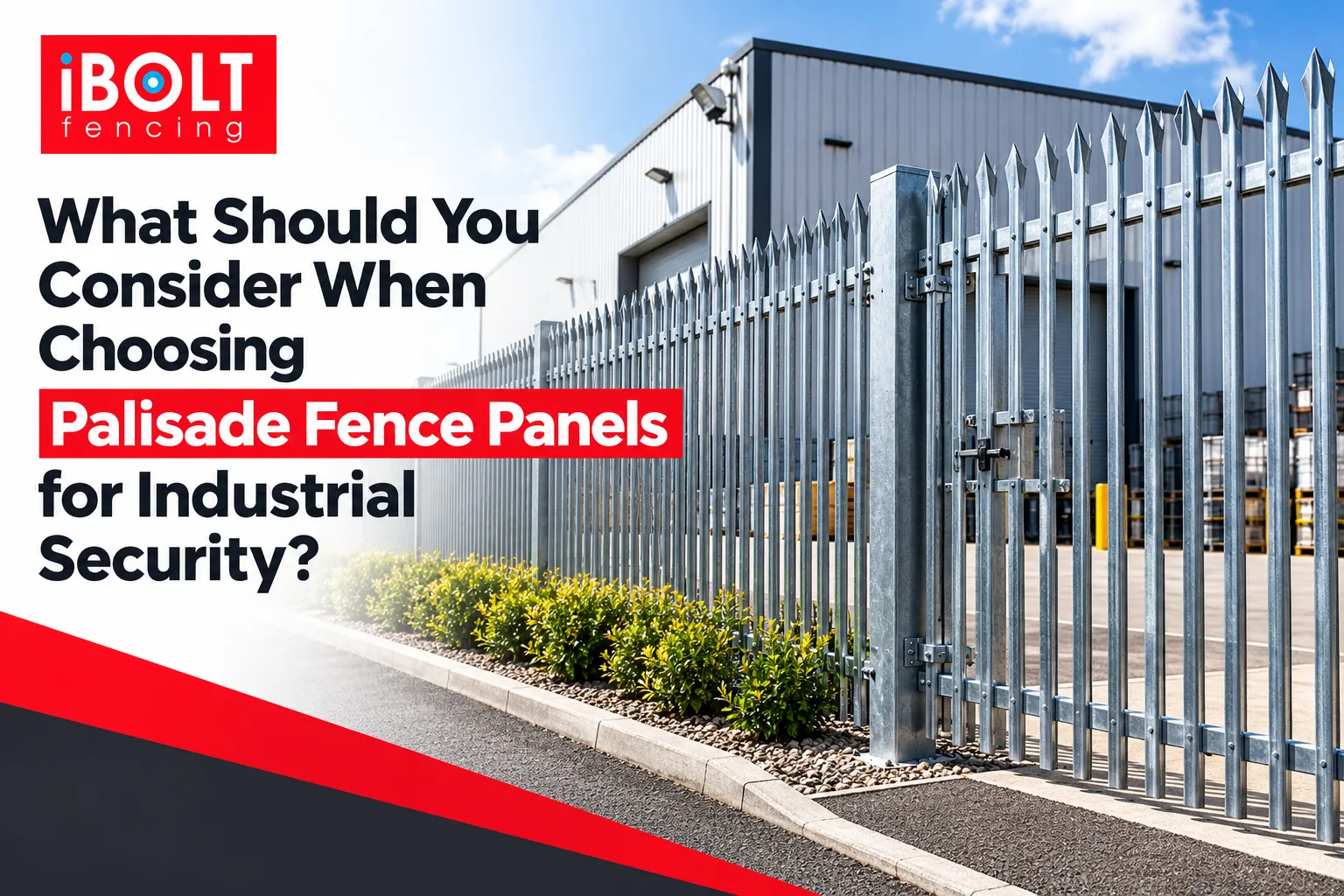
Security is a major consideration for industrial properties, particularly those storing expensive machinery, equipment, raw materials or valuable inventory. A poorly secured perimeter can expose businesses to unauthorised access, theft, vandalism and unnecessary operational disruptions.
Palisade fencing is widely used in industrial environments because its robust steel construction provides a substantial physical barrier while allowing visibility through the perimeter.
However, not every palisade fence offers the same level of protection. Differences in steel profiles, fence height, panel construction, protective coatings and installation methods can influence security performance and long-term durability.
Before investing in palisade fencing, businesses should understand how these factors affect the suitability of different systems.
This guide explores the key considerations when selecting palisade fence panels for industrial properties and explains how to make an informed decision based on your site’s security requirements.
1. Understand Your Industrial Site’s Security Requirements
Before comparing fencing materials or panel designs, identify what the fence needs to protect.
For example, a warehouse containing valuable electronic equipment may require stronger perimeter protection than an open storage yard holding low-value building materials.
A site-specific security assessment helps determine whether standard fencing is sufficient or whether a more substantial configuration is necessary.
2. Compare W-Section and V-Section Palisade Fence Panels
One of the most important choices involves selecting the appropriate steel pale profile.
Two common options are W-section and V-section designs.
W-Section Palisade Fencing
W-section fencing uses steel pales with a folded profile that resembles the letter W.
This profile can provide rigidity and is often considered for properties requiring a more substantial security barrier.
Actual resistance to damage or forced entry depends on material thickness, connections, foundations and the complete fence design.
V-Section Palisade Fencing
V-section fencing uses a shaped steel pale profile designed to provide rigidity while maintaining a relatively straightforward appearance.
It can be suitable for general industrial boundaries, warehouses and commercial storage facilities.
3. Check Steel Quality, Thickness and Panel Construction
The strength of a palisade fence depends on the materials used and how individual components work together.
When reviewing product specifications, pay particular attention to steel thickness, component dimensions, post spacing and connection methods.
Poorly designed connections or inadequate foundations can compromise an otherwise substantial fencing system.
4. Choose the Right Fence Height and Pale Head Design
Fence height is an important consideration when trying to discourage unauthorised access.
Palisade fencing systems may also be available with different pale head designs.
Rounded or Blunt Tops
Rounded or less aggressive pale ends may be appropriate where reducing the risk of accidental injury is a priority.
Pointed or Security-Style Tops
Some industrial security applications use pointed pale heads to discourage climbing.
However, sharp designs are not suitable for every environment and may be subject to additional safety or regulatory considerations.
5. Consider Corrosion Resistance and Protective Coatings
In Perth, high summer temperatures, seasonal rainfall and varying coastal exposure can influence how steel fencing performs.
When evaluating a fence palisade system, examine the available protective finishes rather than focusing only on appearance.
Hot-Dip Galvanising
Hot-dip galvanising involves applying a zinc coating to steel components.
The coating helps protect the underlying metal against corrosion and is commonly used for outdoor steel structures.
Powder Coating
Powder coating provides a coloured finish that can improve appearance and contribute to surface protection when appropriately specified and applied.
6. Evaluate Visibility and Surveillance Requirements
An advantage of palisade fencing is that its open design allows visibility through the boundary.
A carefully planned fencing system should complement existing security measures.
It should not be treated as a replacement for effective surveillance, access control or site-management procedures.
7. Assess Gate Compatibility and Vehicle Access
Gate design should account for vehicle dimensions, available operating space and expected traffic frequency.
Discuss the required access arrangements before the fencing layout is finalised.
8. Check Installation Methods and Ground Conditions
Even high-quality steel fencing can underperform if its installation is unsuitable.
Before approving the work, ask whether the contractor will carry out a detailed site inspection.
9. Compare Total Costs Instead of Panel Prices Alone
Cost is an important factor when securing large industrial properties.
However, comparing only the price of fencing panels may not provide an accurate picture of the total investment.
Businesses should request itemised quotations that identify material specifications, installation work and exclusions.
10. Consider Maintenance and Long-Term Performance
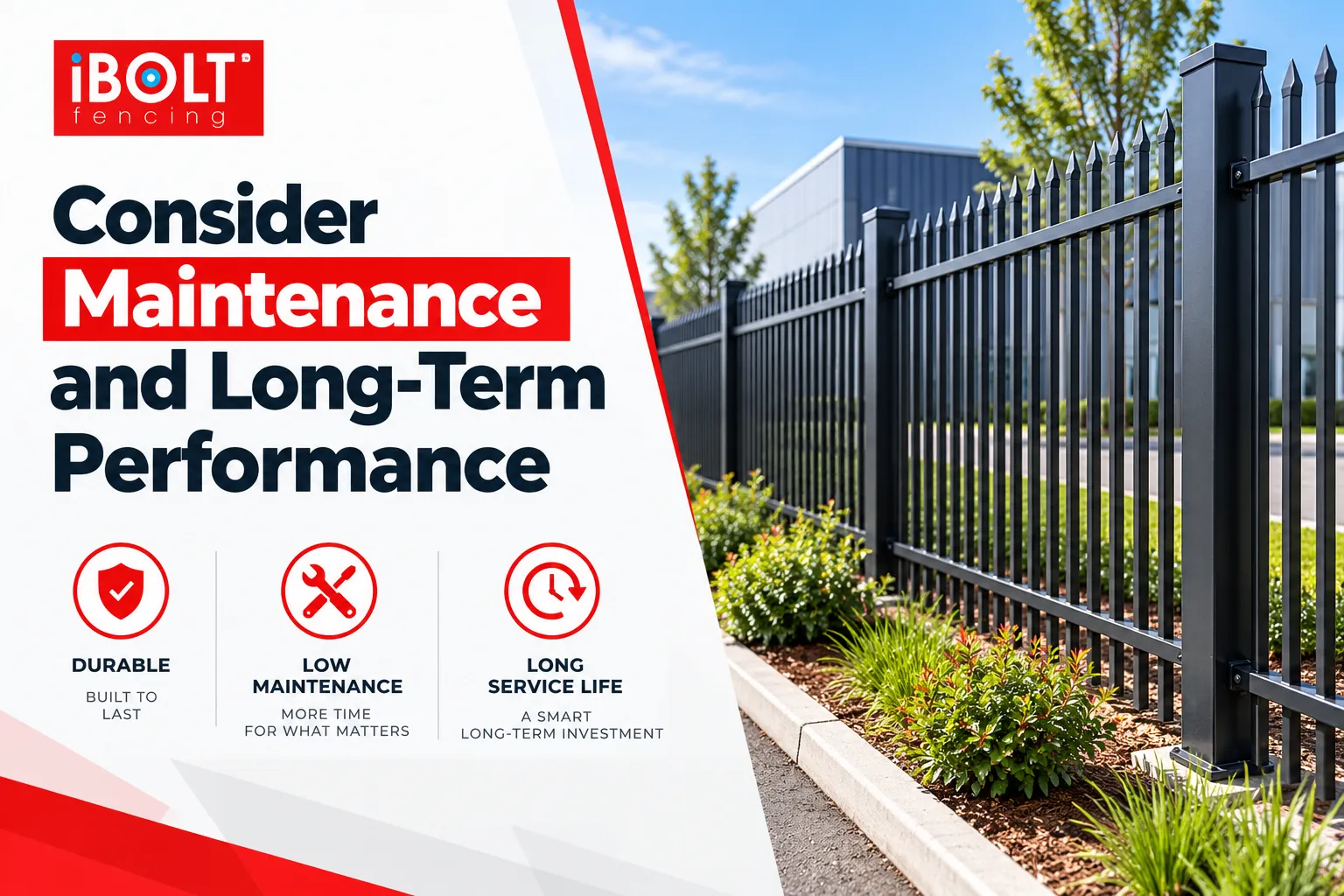
Palisade fencing is often chosen because steel systems can provide durable perimeter protection with relatively manageable maintenance requirements.
However, outdoor fencing still needs periodic inspection.
Businesses should also ask about workmanship warranties, material warranties and the availability of replacement components.
11. Choose an Experienced Palisade Fencing Contractor
When comparing providers of palisade fence panels, look for evidence of relevant experience and the ability to recommend different specifications based on site requirements.
iBolt Fencing offers palisade fencing solutions in Perth, including W-section and V-section designs, different height options and protective finishes for commercial and industrial applications. Its published installation process includes a site visit and customised planning before installation.
Frequently Asked Questions
What is palisade fencing?
Palisade fencing is a steel security fence made of vertical pales bolted or riveted to horizontal rails, which are fixed to steel posts. It’s usually galvanised and sometimes powder-coated, and it’s widely used around industrial sites, depots and utilities.
What is a fence palisade system made of?
A fence palisade system is made of steel pales (usually W-section or V-section), horizontal rails, posts set in concrete footings, and the fixings that join them. Gates are built in the same profile so the perimeter stays consistent.
What is the difference between W-section and V-section palisade fencing?
The main difference is the shape of the steel pale profile. W-section and V-section systems may be specified for different security requirements, but their actual strength depends on material dimensions, construction and installation.
What heights do palisade fence panels come in?
They are commonly available from around 1.2 m to 3 m high, depending on the supplier and pale profile. The right height depends on your site’s security risk, nearby climbing aids and any local requirements.
Are palisade fence panels suitable for coastal properties?
They can be, provided that the materials and protective coatings are suitable for the level of coastal exposure. More aggressive environments may require enhanced corrosion protection and maintenance.
Conclusion
Choosing the right palisade fence panels for industrial security requires careful consideration of more than appearance and upfront cost.
A well-planned palisade fencing installation can support site security, protect valuable assets and provide dependable boundary protection for years to come.
